What Is Anchor Text
September 4, 2026

Photo by Grant Durr on Unsplash
Anchor text is a small on-page element with an outsized role in search engine optimization. Every time a reader clicks a linked word or phrase, that clickable text helps set expectations about where they will go next. Used well, anchor text improves navigation, clarifies topical relationships between pages, and supports a more useful website experience. Used carelessly, it can confuse visitors—or create an unnatural linking pattern that search engines may view skeptically.
What Is Anchor Text in SEO?
Anchor text is the visible, clickable text in a hyperlink. In the sentence, “Read our free SEO audit guide,” the phrase “free SEO audit guide” is the anchor text. Clicking it takes the user to the linked destination page.
In HTML, anchor text sits between opening and closing <a> tags:
<a href="https://example.com/page">descriptive clickable text</a>
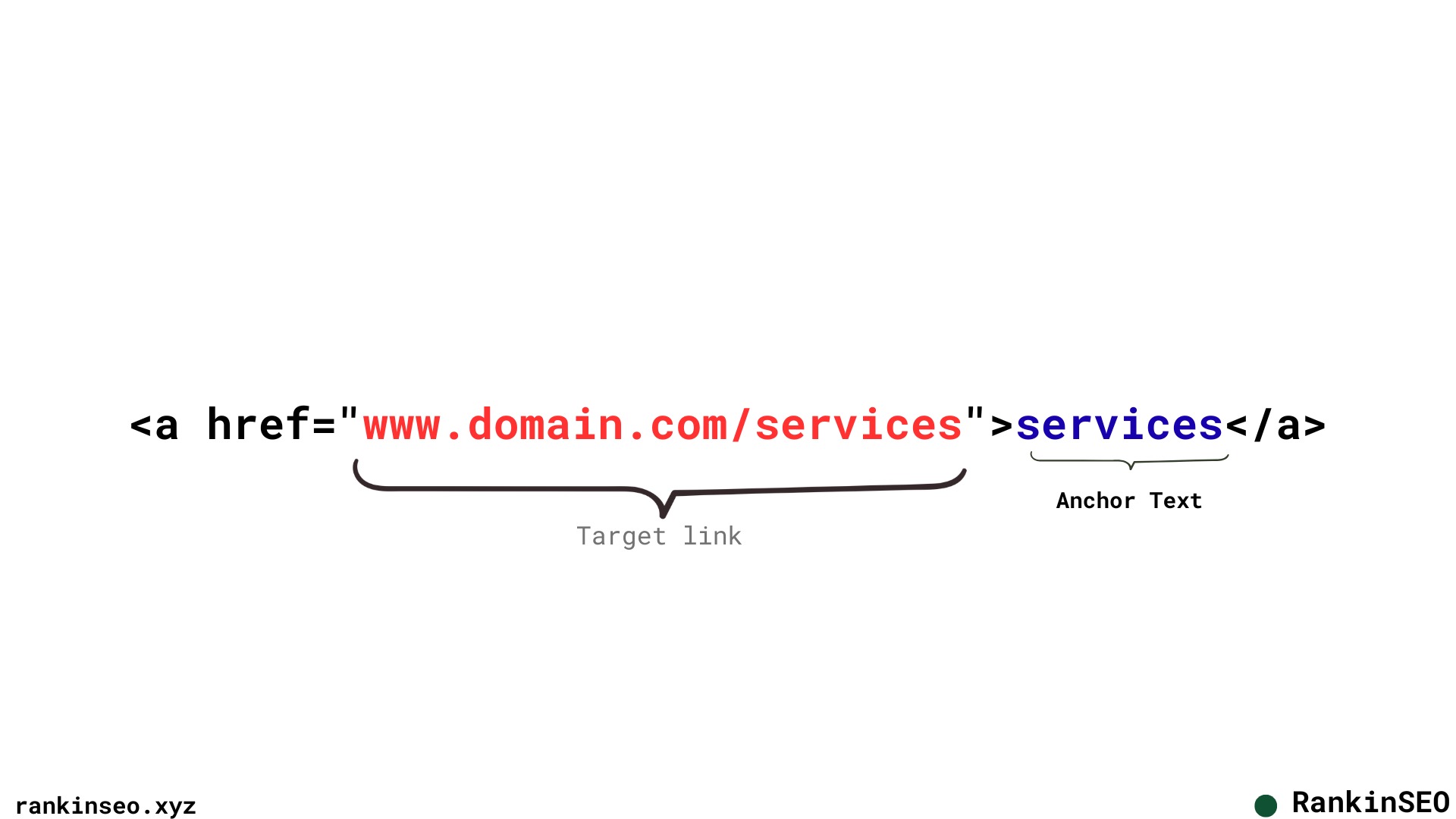
For users, clear link text signals what they can expect after clicking. For search engines, it provides contextual information about the relationship between the current page and the destination URL. Anchor text is therefore part of a broader SEO strategy that includes helpful content, logical site architecture, relevant backlinks, crawlable links, and a strong internal linking structure.
Types of Anchor Text You Should Know
A natural backlink profile and internal-linking strategy usually contain a mix of anchor text variations. Understanding the main categories makes it easier to choose the right phrase for each link.
- Exact-match anchor text: Uses a target keyword exactly, such as “technical SEO audit” linking to a page focused on technical SEO audits.
- Partial-match anchor text: Includes part of the target phrase along with additional words, such as “how to prepare for a technical SEO audit.”
- Branded anchor text: Uses a business, product, or website name, such as “RankinSEO.”
- Naked URL anchor text: Displays the destination address itself, such as “https://example.com/services.”
- Generic anchor text: Uses broad wording such as “learn more,” “click here,” or “this resource.”
- Image alt text: When an image is used as a link, its
altattribute functions similarly to anchor text. Meaningful image alt text helps communicate the linked image’s purpose to screen readers and search engines.
None of these formats is automatically good or bad. The best choice depends on the page context, the destination, the user’s likely intent, and whether the link is internal or external. A healthy link environment generally looks varied and editorial rather than repetitive or forced.
Why Anchor Text Matters for Users and Search Engines
Descriptive anchor text removes friction. A visitor reading an article about on-page optimization should be able to tell whether a link leads to a keyword research checklist, a service page, a case study, or a related blog post before they click it.
That same clarity helps search engines interpret linked-page context. If several relevant pages on your site link to a resource using natural phrases related to “website crawl errors,” the links provide additional signals about the subject of that resource. Search engines assess many signals when evaluating and ranking content, so anchor text should be viewed as one useful contextual element—not a shortcut to rankings.
Strong link labels can also support accessibility. Vague text such as “click here” offers little value to people using screen readers, especially when multiple generic links appear on one page. Instead, use language that remains understandable when read out of surrounding context, such as “view the local SEO checklist” or “compare SEO audit options.”
Internal Linking Anchor Text Best Practices
Internal links connect pages within your own domain. They help visitors discover related content and can help search engines find, crawl, and understand important pages. The goal is not to insert a target keyword into every link; it is to create a logical pathway through your content.
- Match the link to the destination: Link “e-commerce product page SEO” to a genuinely relevant e-commerce SEO resource, not a general homepage.
- Use descriptive language: Tell readers what they will find, whether that is a guide, pricing page, template, service overview, or tutorial.
- Vary phrasing naturally: Multiple internal links can point to the same URL with different, accurate wording when the surrounding context changes.
- Place links where they add value: A contextual in-content link is typically more helpful than a random keyword link placed only for optimization.
- Prioritize important pages thoughtfully: Link to high-value pages from relevant supporting content, but avoid turning every paragraph into a cluster of links.
- Avoid vague repeated labels: Replace recurring “read more” links with clear, specific page descriptions where appropriate.
Internal anchor text should reflect your information architecture. Topic clusters, pillar pages, service pages, and supporting articles work best when their links make the topical relationship obvious to both users and crawlers.
External-Linking Anchor Text: Relevance Over Control
External links point from one website to another. When linking out, use anchor text that accurately describes the source or resource you are citing. For example, a link to an official documentation page should identify the platform or the specific documentation topic, rather than using an unrelated commercial keyword.
When other websites link back to yours, you have less control over the wording they choose—and that is normal. Editorial mentions may use your brand name, a URL, a page title, generic language, or a descriptive phrase. A diverse set of relevant, earned links is generally more credible than a pattern that appears engineered around one exact keyword.
Focus outreach and digital PR efforts on publishing material worth referencing: original research, expert commentary, useful tools, detailed guides, and genuinely helpful resources. Asking every publisher to use identical keyword-rich wording can make a link acquisition campaign look manipulative rather than editorial.
Avoid Over-Optimized and Manipulative Anchor Text
Over-optimized anchor text occurs when links repeatedly use the same keyword-heavy phrase in a way that does not feel natural for the content or audience. For example, forcing “best affordable SEO services” into every internal link, guest post, directory listing, and sponsored placement can create a poor reading experience and an artificial-looking link profile.
Search engines aim to surface useful, trustworthy results and may evaluate linking patterns for relevance, quality, and signs of manipulation. There is no universal anchor-text percentage that guarantees rankings or prevents problems. Instead of chasing ratios, prioritize editorial relevance and reader usefulness.
Be especially cautious with paid links, low-quality guest posting, automated link building, irrelevant directories, and sitewide footer links using commercial keywords. These tactics can create risk because they emphasize ranking manipulation over genuine recommendations. If a link would not make sense to a human reader, reconsider its placement and wording.
How to Write Better Anchor Text
Effective anchor text is concise, accurate, and natural within the sentence. It should communicate the destination’s topic without awkward repetition or unnecessary keyword stuffing.
- Describe the destination: Use “download the SEO content calendar” instead of “click here.”
- Keep it contextually relevant: The surrounding paragraph and linked page should address related topics.
- Write for people first: A useful link improves the reader’s next step; optimization is secondary to clarity.
- Use keywords only when they fit: Relevant terms can be helpful, but they should read like normal language.
- Do not mislead: Never promise a checklist, quote, product page, or local resource if the URL leads somewhere else.
- Review linked images: Give linked images purposeful alt text that explains the image or destination appropriately.
Anchor Text FAQ
What is anchor text in SEO?
Anchor text is the visible, clickable wording of a hyperlink. It helps users understand where a link leads and gives search engines context about the relationship between the linking page and destination page.
What are the different types of anchor text?
The most common types are exact match, partial match, branded, naked URL, generic, and image alt text for linked images. A natural website and backlink profile may include several of these types.
Does anchor text affect Google rankings?
Anchor text can provide context about a linked page, but rankings depend on many factors, including content quality, relevance, technical SEO, site experience, links, and search intent. It is best treated as part of a well-rounded SEO strategy rather than a standalone ranking lever.
What is the best anchor text for internal links?
The best internal-link anchor text is descriptive, concise, and accurately aligned with the destination page. Choose wording that helps a reader predict what they will find after clicking, while fitting naturally into the surrounding copy.
Can too much exact-match anchor text hurt SEO?
Repeated exact-match wording, particularly across externally acquired links, can look unnatural when it appears excessive or disconnected from editorial context. Use exact-match phrases sparingly when they are genuinely useful, and maintain a varied, relevant, user-focused linking approach.
Ready to see how your site stacks up? Run a free SEO audit and get a clear picture of what's holding your rankings back.